
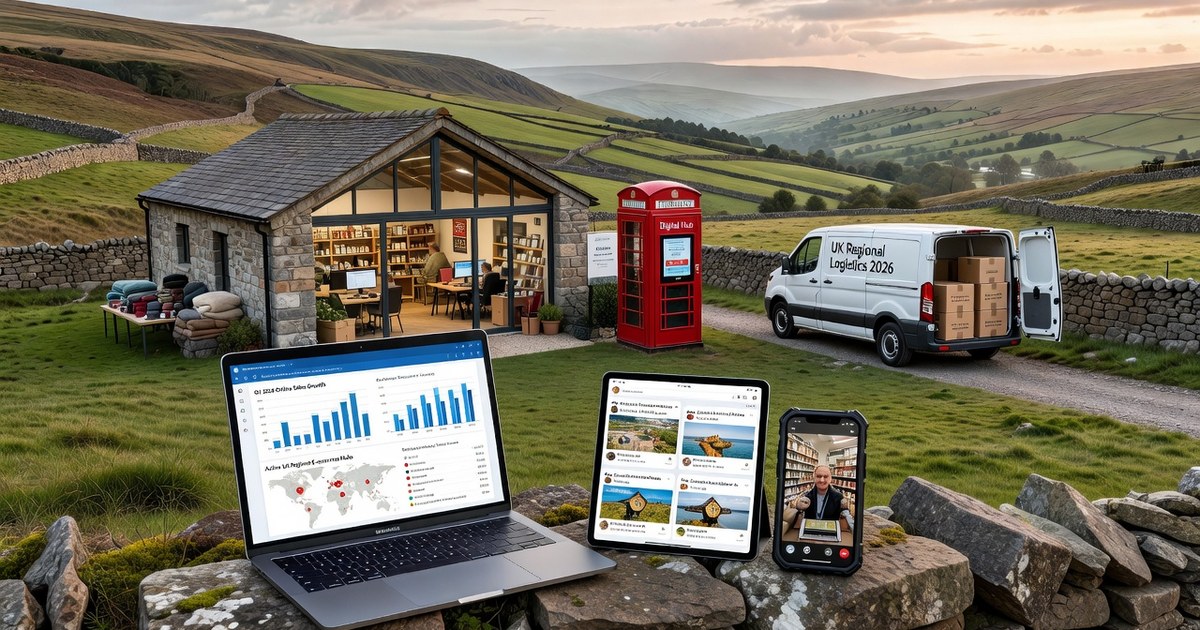
For decades, the biggest advantage a national or London-based competitor held over a regional business was reach: bigger budgets, wider distribution, and greater visibility. In 2026, that gap has narrowed considerably, not because regional businesses have bigger budgets, but because the internet has levelled how visibility is earned. A well-optimised regional plumber, accountancy firm, or retailer can now outrank and outperform national competitors in their own area, provided they understand where the real opportunity sits.
The Shift From National Reach to Local Relevance
Search engines, and increasingly AI search tools, have become far better at understanding intent tied to location. Someone searching "accountant near me" or "best kitchen fitter in Leeds" is shown results tailored to where they are standing, not simply the biggest brand in the sector. This has quietly rebalanced the playing field: a business with strong local signals, consistent listings, positive reviews, and location-specific content, can beat a national competitor with ten times its marketing budget, simply because it is more relevant to that specific search.
This is the core logic behind working with a local SEO agency: the goal isn't to compete on scale, it's to win the searches that matter most to a defined geographic area, where a regional business has every natural advantage.
Why Regional Visibility Now Depends on More Than a Website
A decade ago, having a website was often enough to be found. Today, regional businesses need to manage visibility across a wider set of surfaces:
- Google Business Profile — the single biggest factor in whether a business appears in the local map pack for nearby searches.
- Review platforms — Google, Trustpilot, and industry-specific directories now directly influence both rankings and trust.
- Local citations — consistent name, address, and phone details across directories, which search engines use to verify legitimacy.
- Location-specific content — pages built around the towns, cities, or regions a business actually serves, rather than a single generic "contact us" page.
Getting all of this right consistently is where many regional businesses fall behind, not through lack of quality, but through lack of time and specialist knowledge.
The Growing Role of AI Search in Regional Discovery
Alongside traditional search, a newer shift is underway: AI tools like ChatGPT, Perplexity, and Google's AI Overviews are increasingly used to find and recommend local businesses directly, sometimes without the user ever visiting a traditional search results page. Being recommended by these tools depends on different signals than classic SEO: clear, well-structured information about what a business does, credible mentions across the web, and content that directly answers the questions people are asking.
Regional businesses that keep this in mind alongside their traditional SEO efforts are better positioned to be recommended by AI tools, not just found through a conventional search.
What This Means for Regional Business Owners
The practical takeaway is straightforward: visibility today is won through relevance and consistency, not budget size alone. A regional business that:
- Keeps its local listings accurate and active
- Builds genuine reviews over time
- Publishes content genuinely useful to its local audience
- Understands how it appears to both search engines and AI tools
Is in a stronger competitive position now than it would have been five years ago, regardless of how much a national competitor spends on advertising.
Looking Ahead
The businesses winning regional visibility in 2026 are not necessarily the biggest. They are the ones treating local search, reviews, and emerging AI discovery as a connected strategy rather than separate afterthoughts. For regional business owners who have not revisited how they appear online in the last year or two, it is worth a closer look, the rules have changed, and the opportunity has genuinely shifted in their favour.